Exploring the age-old debate of Private vs public health care: which is better?, this discussion delves into the intricacies of both systems, shedding light on their strengths and weaknesses. Brace yourself for a journey through the realm of healthcare services, where choices have the power to impact lives.
As we navigate through the various aspects of public and private health care, a clearer picture emerges, offering insights that challenge our preconceived notions and beliefs.
Definitions and Overview
Public health care refers to a system where the government is the primary provider of health services to the population, funded through taxes and other government revenues. On the other hand, private health care involves individuals or private companies delivering health services in exchange for payment from patients or through private insurance.Public Health Care:
Key Differences
Government-funded and provided
Accessible to all citizens regardless of income
Lower cost for patients
Pros
Universally accessible
Reduced financial burden on individuals
Emphasis on preventive care
Cons
Longer wait times for non-emergency procedures
Limited choice of healthcare providers
Funding limitations may impact quality of care
Private Health Care:
Key Differences
Privately funded and provided
Access based on ability to pay or private insurance coverage
Higher cost for patients
Pros
Shorter wait times for procedures
Greater choice of healthcare providers
Higher quality facilities and services
Cons
Limited access for those with lower incomes
Financial barriers to care
Emphasis on profit may lead to overuse of services
Accessibility and Affordability
When it comes to accessing healthcare services and the associated costs, public and private systems differ significantly. Let's explore how each system addresses accessibility and affordability.
Accessibility of Public vs. Private Health Care
Public healthcare services are generally more accessible to the general population as they are government-funded and aim to provide healthcare to all individuals, regardless of their financial status. Public hospitals and clinics are spread out across regions, making it easier for people to access primary care and essential medical services.
On the other hand, private healthcare services may have limited accessibility, mainly reserved for those who can afford them or have private health insurance coverage.
Affordability Factors in Public vs. Private Health Care
One of the key differences between public and private healthcare is the affordability factor. Public healthcare services are usually more affordable or even free at the point of service, as they are funded by taxpayers' money. This makes it accessible to lower-income individuals who may not be able to afford private healthcare.
Private healthcare, on the other hand, can be costly, requiring individuals to pay out-of-pocket expenses or have private insurance coverage to access services.
Catering to Different Socioeconomic Groups
Public healthcare systems cater more to lower-income individuals or those without insurance coverage, ensuring that they receive necessary medical care without financial burden. For example, Medicaid in the United States provides healthcare coverage for low-income individuals and families. Private healthcare services, on the other hand, cater more to those with higher incomes or better insurance coverage, offering a wider range of services and amenities for those who can afford them.
Quality of Care
When it comes to comparing private and public health care systems, one crucial aspect to consider is the quality of care provided to patients. Let's delve into how each system measures up in terms of quality.
Quality of Care in Public Health Care Systems
Public health care systems strive to provide quality care to all individuals, regardless of their socio-economic status. However, due to limited resources and high patient volumes, there may be challenges in maintaining consistent quality across all services.
- Public health care systems often face issues such as long wait times for appointments, surgeries, and specialist consultations.
- There may be a lack of funding leading to shortages of medical equipment, facilities, and healthcare professionals in public hospitals.
- In some cases, bureaucratic red tape and inefficiencies can hinder the delivery of timely and effective care to patients.
Quality of Care in Private Health Care Systems
Private health care systems are known for providing more personalized and efficient care due to their focus on customer satisfaction and profitability.
- Private hospitals and clinics typically offer shorter wait times for appointments and procedures, leading to quicker access to care.
- The availability of state-of-the-art medical technology and facilities in private settings can contribute to higher quality outcomes for patients.
- Private healthcare providers often have more flexibility in tailoring treatment plans and offering personalized services to meet individual patient needs.
Factors Impacting Quality of Care in Both Systems
Several factors can influence the quality of care in both public and private health care systems:
- Financial resources allocated to healthcare services play a significant role in determining the quality of care available to patients.
- The level of training and expertise of healthcare professionals directly impacts the quality of diagnosis and treatment provided to patients.
- Governing regulations and guidelines can influence the standards of care in both public and private healthcare settings.
- Patient satisfaction and feedback mechanisms also contribute to improving the overall quality of care in healthcare systems.
Innovation and Technology
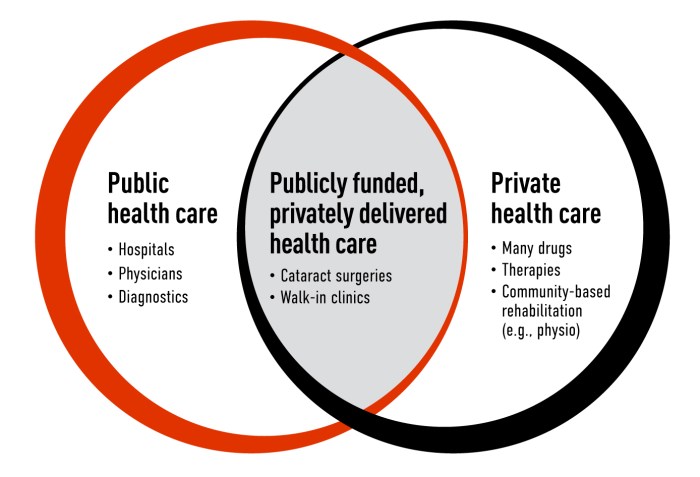
Innovation and technology play a crucial role in shaping the healthcare landscape, both in public and private sectors. They have the potential to revolutionize patient care, improve outcomes, and enhance overall efficiency in healthcare delivery.
Integration in Public Health Care Systems
In public health care systems, the integration of innovation and technology can sometimes be slower due to bureaucratic processes and budget constraints. However, many countries are making strides in adopting new technologies to enhance patient care. For example, electronic health records (EHRs) are increasingly being used to streamline patient information and improve coordination of care.
Telemedicine services are also becoming more prevalent, allowing patients in remote areas to access healthcare services more easily.
Role in Private Health Care Systems
Private health care systems often have more resources and flexibility to invest in cutting-edge technologies. They are quick to adopt innovations that can give them a competitive edge and attract more patients. For instance, private hospitals may invest in robotic surgery systems or advanced imaging technologies to offer state-of-the-art treatments to their patients.
Wearable devices and health apps are also commonly used in private healthcare settings to monitor patient health and improve communication between patients and healthcare providers.
Examples of Adoption in Both Systems
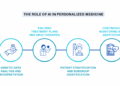
In both public and private healthcare systems, the adoption of artificial intelligence (AI) is gaining momentum. AI-powered tools can help healthcare professionals in diagnosing diseases, predicting patient outcomes, and personalizing treatment plans. Another example is the use of virtual reality (VR) technology in rehabilitation therapies, which is being implemented in both public and private healthcare settings to improve patient outcomes and quality of care.
Patient Experience
Patient experience plays a crucial role in determining the quality of healthcare services. It encompasses various aspects such as communication with healthcare providers, waiting times, comfort levels, and overall satisfaction. Let's explore how patient experience differs between public and private healthcare settings.
Comparison of Patient Experience
In public healthcare settings, patients often experience longer wait times for appointments, procedures, and consultations due to the high volume of patients and limited resources. This can lead to frustration and dissatisfaction among patients. On the other hand, private healthcare settings typically offer shorter wait times and more personalized care due to lower patient volumes and better resource allocation.
- Public healthcare: Patients may encounter overcrowded waiting areas, rushed consultations, and limited access to specialists.
- Private healthcare: Patients often receive more individualized attention, shorter wait times, and a greater range of treatment options.
Patient Satisfaction Levels
Studies have shown that patient satisfaction levels tend to be higher in private healthcare settings compared to public healthcare settings. This is often attributed to the personalized care, shorter wait times, and better amenities offered by private facilities. Patients in private healthcare settings also report feeling more involved in their treatment decisions and having a stronger sense of control over their healthcare.
- Public healthcare: Patient satisfaction levels may vary depending on the quality of care provided, availability of resources, and communication with healthcare providers.
- Private healthcare: Patients generally report higher satisfaction levels due to the enhanced patient experience and personalized care provided.
Anecdotes and Case Studies
Anecdotal evidence and case studies can provide insights into the real-life experiences of patients in both public and private healthcare settings. Positive anecdotes in private healthcare settings often highlight the exceptional care, personalized attention, and efficient services received. Conversely, negative anecdotes in public healthcare settings may focus on long wait times, lack of communication, and limited treatment options.
It is essential to consider patient experience when evaluating the effectiveness and quality of healthcare services, as it directly impacts patient outcomes and satisfaction levels.
Conclusion
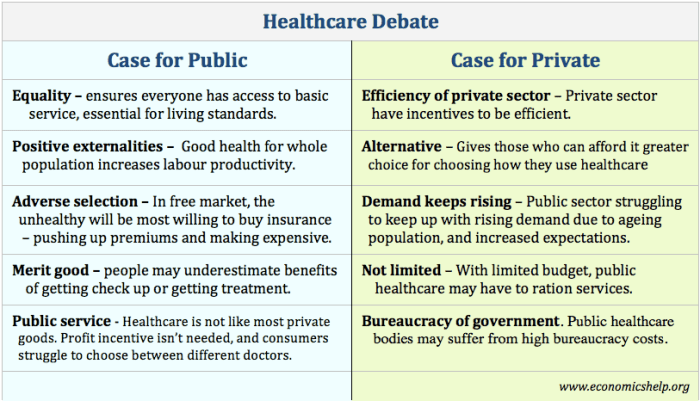
In conclusion, the comparison between Private vs public health care: which is better? unveils a complex landscape where decisions are not simply black or white. By weighing the pros and cons of each system, individuals can make informed choices that align with their healthcare needs and preferences.
FAQ Corner
Is private health care always better than public health care?
Not necessarily. Private health care may offer faster services, but public health care ensures universal access to all individuals regardless of financial status.
Are public health care services of lower quality compared to private health care?
Not necessarily. Public health care systems often focus on preventive care and may provide more comprehensive services, while private health care can offer specialized treatments.
Do private health care facilities always have the latest technology compared to public health care?
Not always. While private health care facilities may invest more in the latest technology, some public health care systems also prioritize innovation to enhance patient care.